

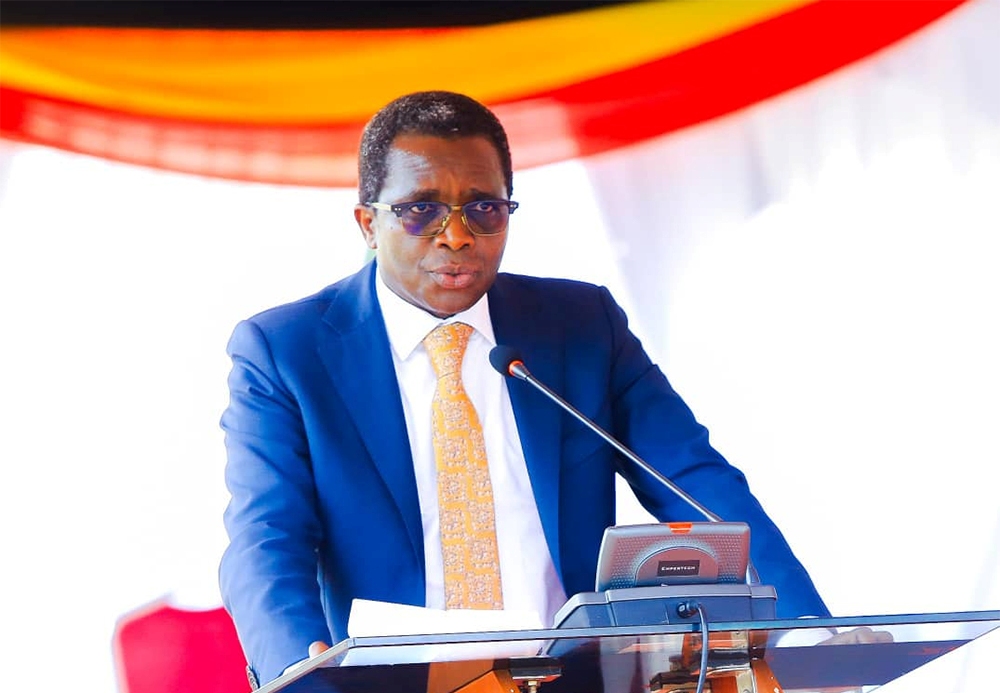
State Minister for Northern Uganda Rehabilitation Dr Kenneth Omona has ignited significant political discourse with his recent tweet tagged #KAWEMPE MESS.
In the post, Omona posed provocative questions about the events in Kawempe, suggesting they might have been designed to portray the National Resistance Movement (NRM) as incompetent or the National Unity Platform (NUP) as militant.
These allegations have sparked widespread speculation about the motives behind these actions and their implications for Uganda’s political landscape.
Omona’s tweet highlights the growing role of social media in shaping political narratives.
As government officials and political figures increasingly use platforms like X (formerly Twitter) to engage with the public, the transparency and integrity of political processes come under scrutiny.
The suggestion that events could be orchestrated to manipulate public perception raises concerns about accountability and ethical governance.
The tweet also underscores the complex dynamics between Uganda’s ruling party and opposition groups. If such strategies are indeed at play, they could further polarize an already divided political environment, eroding public trust in both the government and opposition.
As the story unfolds, the responses from the NRM and NUP will be crucial in addressing the concerns raised by Omona’s post. Whether these allegations are substantiated or dismissed as political posturing, the implications of this tweet are likely to resonate far beyond Kawempe, shaping the narrative of Ugandan politics in the months to come.

Key Players Involved:
- Dr. Kenneth Omona: State Minister for Northern Uganda Rehabilitation
- National Resistance Movement (NRM): Uganda’s ruling party
- National Unity Platform (NUP): Opposition party
Possible Implications:
- Further polarization of Uganda’s political environment
- Erosion of public trust in both the government and opposition
- Increased scrutiny of social media’s role in shaping political narratives




 Alexi McCammond
 Brooklyn Amber
 Francis Oyet
 Isaac Erick Odongo
 Janna Jihad
 Admin
Admin Andrew Ogwang
 Samson Kasumba
 Song Moo-Bin (송무빈)
 TwalibZaitunk
 The Northern Press