

Kampala, Uganda – July 22, 2025
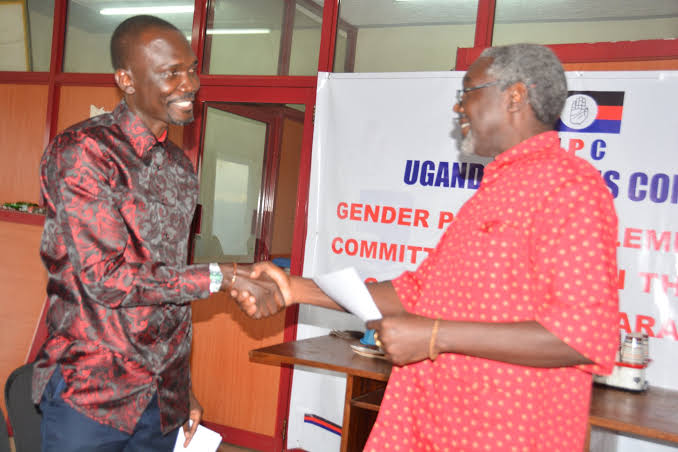
The Uganda People’s Congress (UPC) Electoral Commission has disqualified Mr. Dennis Adim Enap, a key contender for the party presidency, clearing the path for incumbent Lira City MP Jimmy Akena to pursue the UPC presidential candidacy for the 2026 general election. The decision, announced on Tuesday at the party headquarters in Kampala, has sparked controversy and accusations of bias within the party.
Enap Disqualified for Violating Party Rules
UPC Electoral Commission Chairperson Mahmoud Kazimbiraine cited violations of the party’s electoral roadmap, guidelines, and constitution as the basis for Enap’s disqualification. Specifically, Kazimbiraine pointed to a message from Enap that allegedly declared him as the UPC president, an action deemed outside the commission’s ruling and warranting his removal from the candidacy race.
Enap, a city lawyer and former aide to Akena, denounced the disqualification as “illegal and unfair,” alleging it was orchestrated by Akena, who has led the UPC for over a decade. Enap’s claims come on the heels of a recent legal victory where he successfully challenged Akena’s eligibility to run for a third term as party president.
Court Ruling Against Akena
In a significant development, the High Court in Kampala, in a ruling delivered on July 18, 2025, by Justice Bernard Namanya, declared Akena’s nomination for the 2025–2030 UPC presidency “illegal, null, and void.” The court cited Article 14.1(3) of the UPC constitution, which limits party presidents to two five-year terms unless they win a national presidential election during their second term—a condition Akena has not met. The court issued an injunction restraining UPC from nominating Akena again and quashed his candidacy, potentially opening the door for new leadership.
Despite this ruling, the UPC Electoral Commission’s decision to disqualify Enap has raised questions about the party’s internal processes and adherence to the court’s directive.

Three UPC Officials Suspended
In a related move, UPC President Jimmy Akena announced the suspension of three Electoral Commission members—Vice Chairperson Jack Kabuusu, Commissioner Magere Emmanuel, and Commissioner Aisha Naomi Natukunda—for “gross misconduct.” The trio reportedly signed a certificate declaring Enap as the unopposed party president, an action Akena and the commission deemed as overstepping their mandate.
The suspensions have further deepened the rift within the UPC, with critics arguing that Akena’s influence over the party’s electoral processes undermines democratic principles. The sacked officials have not yet publicly responded to their suspensions.
Enap’s Defiance and UPC’s Future
Enap has vowed to challenge his disqualification, calling it a strategic move to suppress dissent and maintain Akena’s grip on the party. He argues that the decision contradicts the High Court’s ruling and reflects Akena’s unwillingness to relinquish power. Enap, who has positioned himself as a reformist aiming to revive UPC’s historical prominence, promised to pursue legal and political avenues to contest the decision.
The UPC, founded in 1960 by Milton Obote, Akena’s father, has faced internal divisions and declining influence in recent decades. Akena’s leadership has been criticized for aligning with the ruling National Resistance Movement (NRM), a claim he denies, asserting that his personal alliance with President Museveni does not reflect the party’s stance.
Looking Ahead to 2026
As Uganda gears up for the 2026 general elections, the UPC’s internal turmoil could impact its ability to mount a competitive campaign. Akena, who has expressed ambitions to challenge President Yoweri Museveni, has emphasized grassroots mobilization and party restructuring. However, the disqualification of Enap and the suspension of the three officials risk alienating key party members and supporters.
The UPC Electoral Commission has outlined a roadmap for the 2026 elections, with district and city executive elections scheduled for July 28, 2025, and the announcement of the party’s presidential flagbearer set for July 30, 2025. The annual delegates’ conference in August will formalize the party’s leadership and strategy.
As the UPC navigates this leadership crisis, the party’s ability to unify and present a credible alternative to the NRM remains uncertain. Observers note that resolving internal conflicts and adhering to constitutional and legal frameworks will be critical for the UPC to regain its footing in Uganda’s political landscape.






 Alexi McCammond
 Brooklyn Amber
 Francis Oyet
 Isaac Erick Odongo
 Janna Jihad
 Admin
Admin Andrew Ogwang
 Samson Kasumba
 Song Moo-Bin (송무빈)
 TwalibZaitunk
 The Northern Press