

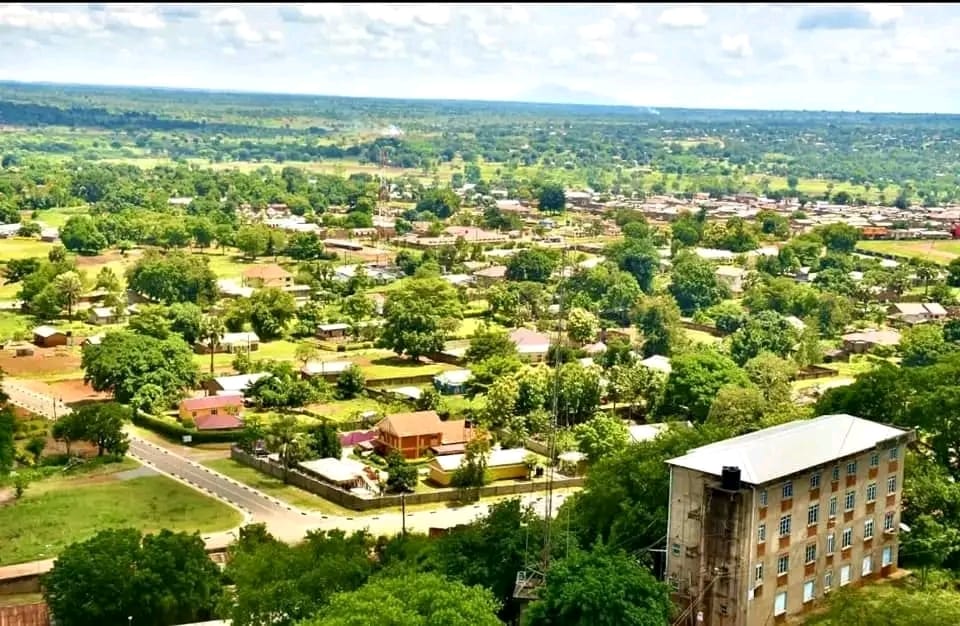
Kitgum, Uganda | August 7, 2025 – Kitgum District has returned Shs1.7 billion to the national treasury after failing to utilize the funds during the 2024/2025 financial year, despite receiving a total budget and supplementary allocations exceeding Shs41 billion.
The district managed to spend approximately Shs39 billion, representing 95.7% of the allocated funds, leaving the unspent balance to be remitted back to the central government.
According to District Chairperson Arwai Christopher Obol, the unspent funds were primarily earmarked for salaries of technical staff who were not recruited due to delays in receiving clearance from the Ministry of Public Service. “We had planned to recruit essential staff, but without approval from the Ministry, we couldn’t proceed, and the funds remained unutilized,” Obol explained during a press briefing on August 6, 2025.
A detailed breakdown of the unspent funds reveals significant allocations across various departments. The largest portion, Shs927 million, was intended for teachers’ salaries, followed by Shs282 million for pension payments. The human resource department accounted for Shs246 million, while the agriculture department had Shs94 million unspent. Additionally, Shs43 million allocated for the micro-scale irrigation project and co-funding remained untouched. The finance department returned Shs37 million, administration Shs21 million, commercial department Shs15 million, and works and technical services Shs4.5 million.
The failure to recruit critical staff has raised concerns among local leaders and residents, who argue that the unspent funds could have addressed pressing needs in the district. Mary Akello, a primary school teacher in Kitgum Town Council, expressed frustration, stating, “We are understaffed in schools, and students are suffering. If the district had recruited more teachers, our workload would be lighter, and education quality would improve.”
Obol noted that the district had submitted recruitment requests to the Ministry of Public Service as early as July 2024, but delays in processing and approving the requests stalled the process. “We followed all procedures, but the clearance never came in time. This is beyond our control,” he said.
The return of the funds has sparked criticism from community leaders, who argue that the central government’s bureaucratic bottlenecks are undermining service delivery in Kitgum. John Ogweng, a councillor representing Labongo Amida Sub-county, called for reforms in the recruitment process. “The Ministry needs to decentralize some of these decisions. We know our needs better at the district level,” he said.
The unspent funds also highlight broader challenges in the district’s financial management. The micro-scale irrigation project, intended to boost agricultural productivity, stalled due to delays in mobilizing co-funding contributions from local farmers. Similarly, administrative bottlenecks and understaffing in the human resource and finance departments contributed to the failure to fully absorb allocated budgets.
Kitgum’s Chief Administrative Officer, Jane Abola, defended the district’s performance, noting that achieving 95.7% expenditure was a significant accomplishment given the challenges. “We have made strides in utilizing the budget effectively, but external factors like recruitment delays impacted our ability to spend the remaining funds,” Abola said. She added that the district is working with the Ministry of Public Service to expedite recruitment for the 2025/2026 financial year to avoid similar setbacks.
The return of Shs1.7 billion has prompted calls for greater accountability and efficiency in budget utilization. Residents are urging the district leadership to engage with the central government to streamline processes and ensure timely recruitment and project implementation. “These funds could have transformed our schools, farms, and roads,” said Peter Okello, a farmer in Orom Sub-county. “We hope next year will be different.”
As Kitgum awaits clearance to recruit critical staff and implement stalled projects, the district remains under pressure to maximize its resources to address the needs of its growing population. The return of unspent funds serves as a stark reminder of the challenges local governments face in navigating bureaucratic hurdles to deliver services effectively.






 Alexi McCammond
 Brooklyn Amber
 Francis Oyet
 Isaac Erick Odongo
 Janna Jihad
 Admin
Admin Andrew Ogwang
 Samson Kasumba
 Song Moo-Bin (송무빈)
 TwalibZaitunk
 The Northern Press