

October 16, 2025 – Kampala, Uganda
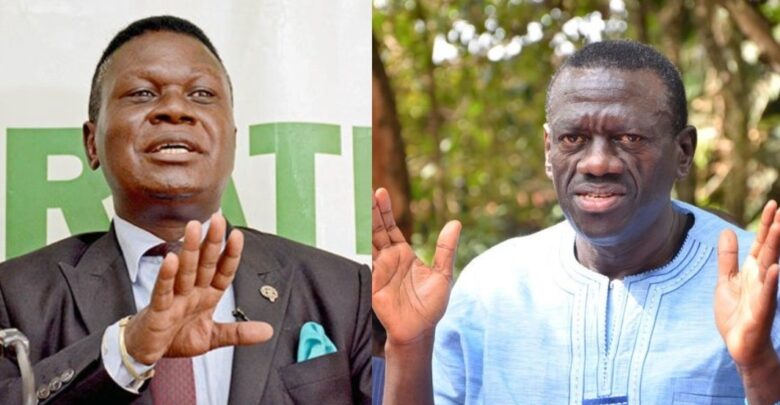
Justice and Constitutional Affairs Minister Norbert Mao has pointed fingers at former Forum for Democratic Change (FDC) president Dr. Kizza Besigye, blaming him for the prolonged delay in his high-profile treason trial.
Speaking at the launch of the Office of the Director of Public Prosecutions (ODPP) Strategic Plan 2025-2030 in Kampala on Thursday, Mao accused Besigye of orchestrating “courtroom drama” to obstruct the judicial process.
Mao refuted claims that the state or the ODPP is responsible for the stalled proceedings, asserting that the prosecution is fully prepared to move forward with the case. He highlighted that the ODPP has assembled evidence and fewer than 20 witnesses, ready to present their case. However, he alleged that Besigye’s legal team has employed deliberate tactics—such as repeated applications, constitutional references, and attempts to influence the selection of judges—to derail the trial.

The minister’s comments come in response to Besigye’s recent challenge to the court’s composition. Besigye, currently on remand at Luzira Prison alongside his aide Hajji Obeid Lutale and Captain Denis Oola, argued that his trial should not proceed before the High Court’s Criminal Division, as he was committed to the International Crimes Division by the Nakawa Chief Magistrate’s Court. Mao described these moves as technical maneuvers designed to delay justice and sway public opinion in Besigye’s favor.
“These are deliberate attempts to frustrate the process,” Mao stated, emphasizing that the prosecution’s readiness is being undermined by what he called strategic legal posturing. He accused the defense of leveraging procedural technicalities to gain sympathy outside the courtroom rather than engaging with the substantive charges.

Dr. Besigye and his co-accused face treason charges for allegedly plotting to overthrow President Yoweri Museveni’s government. The case, which has drawn significant public attention, continues to highlight tensions between Uganda’s judicial system and high-profile political figures.
As the trial remains mired in procedural disputes, Minister Mao’s remarks underscore the government’s frustration with the pace of justice. The ODPP, meanwhile, insists it is prepared to proceed once the court resolves the ongoing legal challenges. The case remains a focal point in Uganda’s political and judicial landscape, with further developments eagerly awaited.





 Alexi McCammond
 Brooklyn Amber
 Francis Oyet
 Isaac Erick Odongo
 Janna Jihad
 Admin
Admin Andrew Ogwang
 Samson Kasumba
 Song Moo-Bin (송무빈)
 TwalibZaitunk
 The Northern Press